

Azabudai Hills and Toranomon Hills Receive LEED ND and LEED BD+C Platinum Certifications
Mori Building is the first company in Japan to achieve these certifications, awarded in recognition of excellent environmental performance and urban development in cooperation with local landowners
Tokyo, October 31, 2025 — Mori Building Co., Ltd., Japan's leading urban landscape developer, is pleased to announce that two of its managed developments, Azabudai Hills and Toranomon Hills, have been awarded the highest Platinum certification by the U.S. Green Building Council (USGBC). The certifications were granted in the Neighborhood Development (LEED ND) category, which recognizes sustainable neighborhood-scale projects. Additionally, Azabudai Hills Mori JP Tower and Toranomon Hills Station Tower earned Platinum certification in the Building Design and Construction: Core and Shell, “LEED BD+C(CS)” category, which evaluates buildings designed to accommodate tenants, such as offices or retail complexes. These achievements mark the first-ever Platinum certifications achieved by a company in Japan in both the LEED ND and LEED BD+C (CS) categories. (Azabudai Hills Residence B is not included within the scope of this LEED ND certification; post-construction assessments are expected to lead to area-wide certification.)
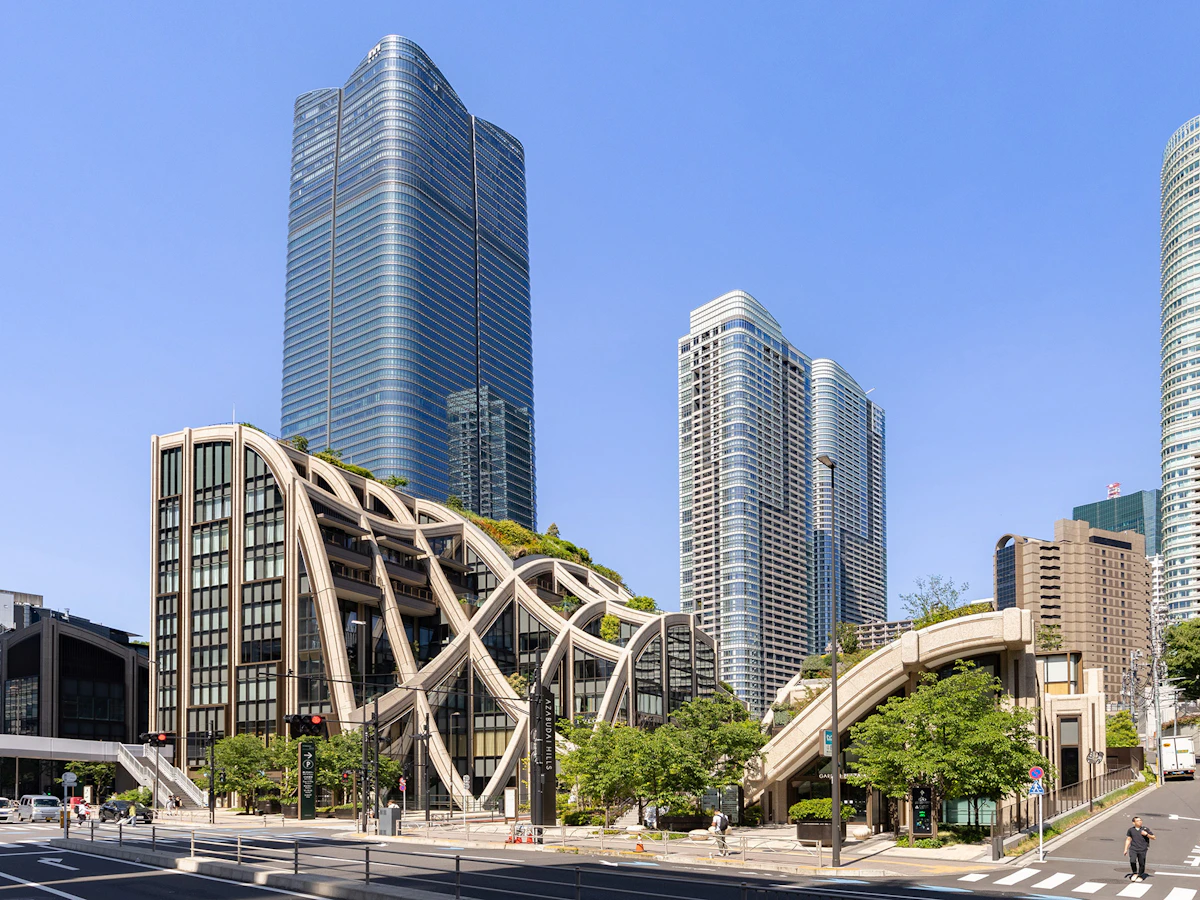
Azabudai Hills
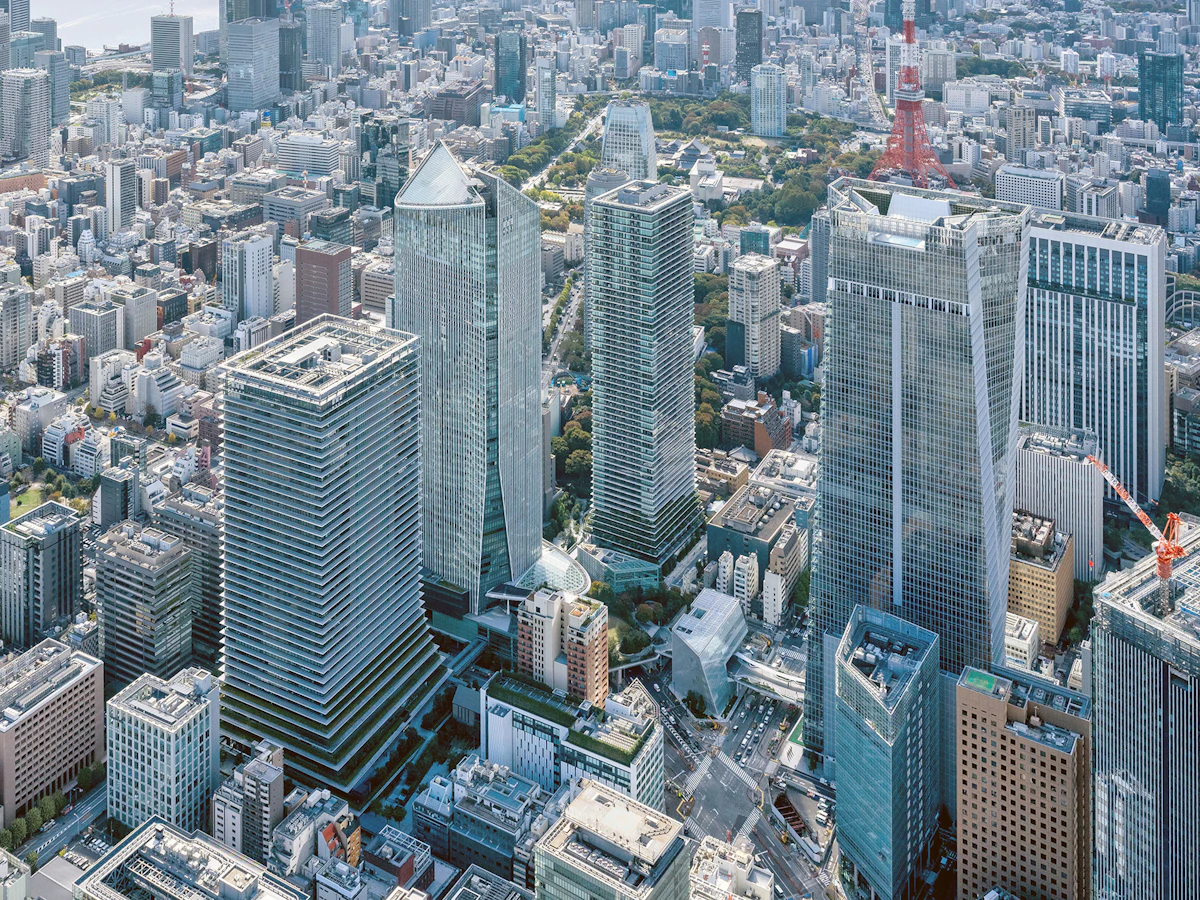
Toranomon Hills
The Highest Rank Achieved by a Company in Japan in the World’s Most Widely Adopted International Environmental Certification
“LEED”is an international environmental certification system originating in the United States, designed to evaluate the environmental performance of buildings and urban developments. It is one of the most widely adopted environmental certifications in the world. As of September 2025, there have been over 120,000 LEED certifications issued globally. However, only 146 certifications have been granted in the Neighborhood Development (LEED ND) category, with just 13 achieving Platinum certification. The recent Platinum certifications for Azabudai Hills and Toranomon Hills mark the first-ever instance of such recognition in Japan.
Recognized for Urban Development Promoted in Collaboration with Local Communities, and for Environmental and Energy-Saving Performance
Both Hills developments were highly rated in the LEED ND category, not only for their environmental features—such as “efficient energy supply through district heating and cooling systems,” “water conservation efforts,” and the“use of renewable energy”—but also for their commitment to “urban development promoted in collaboration with local rights holders.”
Additionally, in the LEED BD+C (CS) category, the buildings were highly rated in respect of their environmental specifications, including “effective utilization of water resources,”“area-wide energy efficiency,”and“energy-saving performance.”Beyond these physical attributes, the developments were also praised for their“soft”initiatives, such as systems and frameworks allowing“collaboration with tenant occupants on energy-saving efforts”and the“supply of renewable energy”generated from newly installed equipment.
Comments from Key Leaders
Mr. Peter Templeton, President and CEO of USGBC:“Mori Building continues to demonstrate global leadership by achieving LEED Platinum certification for the Toranomon Hills Station Tower, Azabudai Hills Mori JP Tower, and the entire Toranomon Hills and Azabudai Hills districts. These world-class projects will serve as models for developers everywhere seeking to maximize positive environmental impacts, emissions reductions, operational savings and quality of life for occupants and community members.”
Hiroki Hiramatsu, Co-Founder, Green Building Japan:“Mori Building is promoting efficient energy use, renewable power, and enhanced walkability, while also connecting multiple public transportation systems to create compact, livable urban environments. I believe both projects, which have increased the value of their surrounding areas, are truly exemplary and deserve recognition as leading examples of urban development in Japan.”
Guided by its enduring philosophy of“Create Cities, Nurture Cities,”Mori Building will continue to strive to achieve the coexistence of urban life and nature, the decarbonization of cities, and the development of resource-circulating urban environments, thereby helping to realize a sustainable society in the future.