
Laforet Harajuku
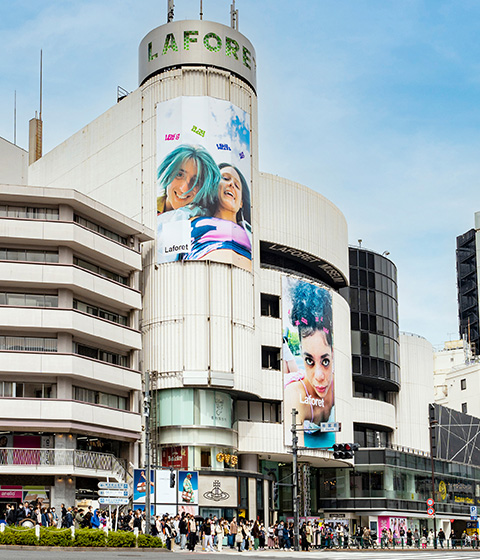
New Dimensions in Fashion and Culture
Conceived to fulfill the dual roles of offering retail space specializing in fashion and event space anchored by the Laforet Museum, Laforet Harajuku opened in 1978 and immediately became the focus of attention as a place to find leading brands, as an incubator for creators, artists and entrepreneurs, as a venue for trendsetting events and as an originator of very topical advertising.
With the recent debut of Omotesando Hills, the Harajuku / Omotesando area has been given yet another fresh injection of vitality and remains Japan's premier home of fashion and style. The trendsetting influence of Laforet Harajuku, which is now commemorating four decades as one of the most recognizable landmarks of the area, also remains undimmed.
Facility Overview
Retail facilities
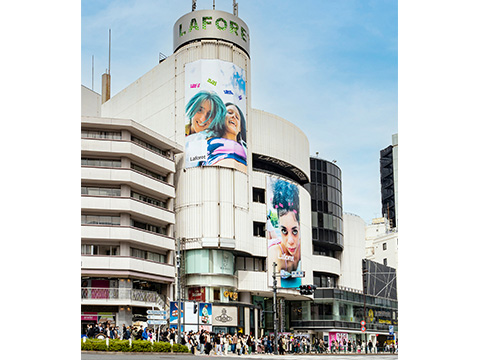
Laforet Harajuku has been very successful at bringing out the appeal of the town of Harajuku by constantly offering cutting-edge fashion information, incubating young fashion creators and a large number of entrepreneurs and producing a wide range of events.
Conference Facilities and Event Space
Laforet Museum
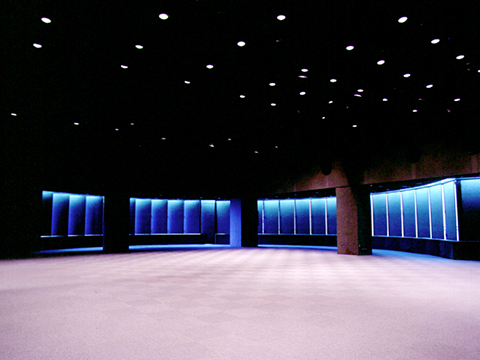
Since the museum opened, it has constantly produced a large number of events of many different kinds in order to enable visitors to enjoy genuine art and entertainment that transcends genres. The rich variety of culture produced from here has had various impacts on eras, towns, and people. The Laforet Museum will continue to initiate new trends for new eras.
Data Sheet
| Location | 1-11-6 Jingumae, Shibuya-ku, Tokyo |
| Building Ground Area | 2,553m² |
| Building Site Area | 2,249m² |
| Total Floor Area | 15,594m² |
| Facilities | Retail Facilities, etc. |
| Floor | 6 floors above ground/ 2 floors underground |
| Height | 29m |
| Construction Started | 1997 |
| Construction Completion | October 1978 |
| Structure | SRC |
| Architect | IRIE MIYAKE ARCHITECTS & ENGINEERS |
| Constructor | SHIMIZU CORPORATION |
| Project Executor | Mori Building Co., Ltd. |